
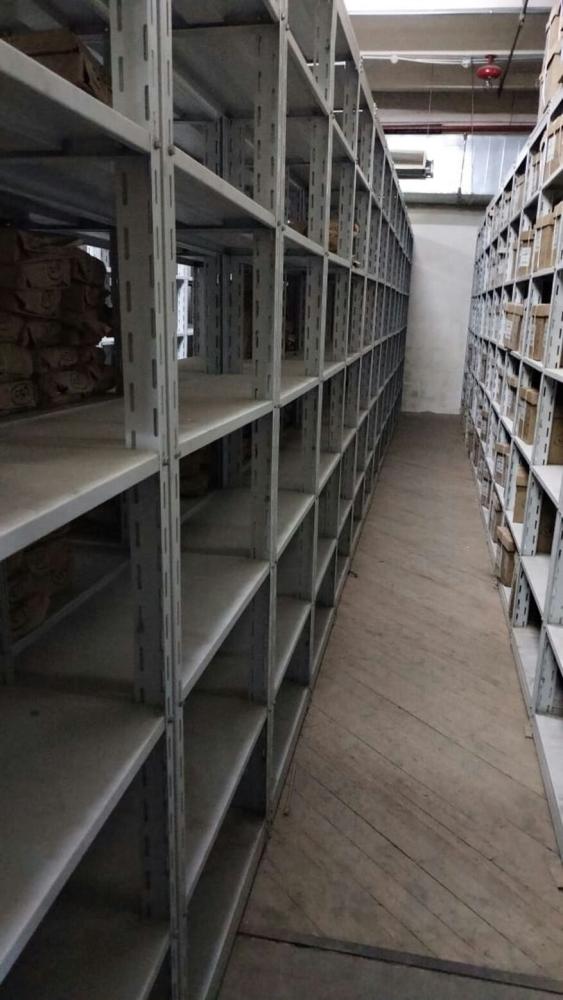
When a warehouse or shop owner in Riyadh is asked why they chose a particular type of steel shelving, the response almost always boils down to two factors: either a salesperson recommended it, or it was the cheapest option available.
This decision pattern explains many common post-installation issues: shelves sagging within weeks of setup, or businesses overspending on industrial-grade racks designed for tons when their inventory only weighs a few kilograms.
The choice between heavy-duty and light-duty shelving extends far beyond initial price tags—it impacts workplace safety, storage efficiency, and structural longevity.
What is Heavy-Duty Steel Shelving (Heavy Duty)?
Heavy-duty racks are engineered from solid steel plates with a sheet thickness starting at 1.5 mm and above. They are reinforced with lateral beams and cross-bracing that distribute weight across the entire upright framework rather than concentrating stress on a single point.
This industrial design delivers weight capacities ranging from 300 kg to well over 1,000 kg per shelf tier:
- Practical Applications: Indispensable for palletized goods, wholesale food sacks (rice, flour, sugar), bulk cooking oil cartons, auto spare parts, and industrial equipment.
- Where It Fits Best: Wholesale depots, manufacturing facilities, logistics hubs, and commercial centers across industrial areas in Riyadh.
What is Light-Duty Steel Shelving (Light Duty)?
Light-duty shelving uses lighter gauge metal and compact framing, often without additional load-bearing support beams. These units typically support loads between 50 and 150 kg per shelf tier.
- Practical Applications: Ideal for corporate offices, archive box storage, administrative records, pharmacies, and small retail shops displaying lightweight merchandise or accessories.
- Common Pitfall: Using light-duty units to cut initial setup costs for heavier inventory leads directly to bent shelves, frame warping, and safety hazards, resulting in costly replacements.
Quick Comparison: Heavy-Duty vs. Light-Duty Shelving
| Criteria | Heavy-Duty Shelving (Heavy Duty) | Light-Duty Shelving (Light Duty) |
| Load Capacity Per Tier | 300 kg to over 1,000 kg | 50 kg to 150 kg |
| Steel Sheet Thickness | 1.5 mm and thicker (reinforced beams) | Under 1.0 mm to 1.2 mm |
| Target Application | Wholesale warehouses, factories, auto parts | Offices, archives, retail boutiques, pantries |
| Expected Lifespan | 10+ years under proper maintenance | Moderate; degrades rapidly when overloaded |
How to Determine the Right Choice for Your Facility
You don't need complicated formulas to make the right choice. Simply evaluate these key criteria:
- What is the heaviest single carton or item you will store?
- If individual items exceed 20–25 kg, or if the total distributed weight per level exceeds 200 kg, heavy-duty racking is the necessary and safe choice.
- Loading & Handling Methods:
- If items are handled via forklifts, heavy carts, or rapid daily pallet rotations, heavy industrial frames prevent accidental impact damage.
- Ceiling Height and Cumulative Weight:
- In high-ceiling facilities utilizing vertical uprights, total weight accumulates down onto the bottom baseplates. Even with moderate individual box weights, tall multi-tier configurations require heavy-duty upright frames.
Common Mistakes to Avoid When Buying Shelving
- Relying solely on seller suggestions without calculating actual product weights beforehand.
- Comparing price tags while ignoring steel gauge, upright profile thickness, and anti-rust powder coatings.
- Forgetting to calculate cumulative vertical load across all upper shelf levels.
- Overlooking aisle clearances and doorway access dimensions before ordering and assembly.
At Watan Al Rfoof, we assess your product specifications and warehouse floor layout prior to recommending any shelving system. Our goal is to ensure you invest in the right setup from day one—avoiding preventable damage, safety risks, and unnecessary replacement costs.
Need assistance determining the right shelving specifications for your space?
Contact our technical team today for tailored recommendations and on-site consultations in Riyadh.
Frequently Asked Questions
What is the maximum weight capacity for heavy-duty shelving?
Standard heavy-duty manual shelving generally supports between 300 kg and 1,000 kg per level, while industrial pallet racking systems handle significantly higher capacities tailored to industrial loads.
Can light-duty shelving be used in commercial warehouses?
Yes, provided it is reserved specifically for lightweight items such as small parts bins, packaging supplies, or office records. Problems arise only when these units are loaded beyond their rated thresholds.
Is the price difference between heavy and light shelving worth the investment?
Yes. Investing in heavy-duty shelving protects against shelf collapse, prevents inventory damage, and eliminates recurring repair and replacement costs over the life of your business.